

When planning for the future, ensuring that your assets are managed and distributed according to your wishes is essential. Wills and trusts are two of the most common tools used in estate planning to achieve these goals. While both serve similar purposes, they differ significantly in terms of functionality, privacy, and control. Understanding these differences can help you make an informed decision about which option—or combination of both—is right for you.
What Is a Will?
A will, or last will and testament, is a legal document that outlines your wishes regarding the distribution of your assets, the care of any minor children, and other personal matters after your death. It allows you to name an executor, who will be responsible for managing your estate, settling debts, and distributing assets to your beneficiaries according to your instructions.
Key Features of a Will:
Simplicity: Wills are straightforward to create and can cover a wide range of personal and financial decisions, including naming guardians for minor children.
Probate: A will must go through the probate process, a court-supervised procedure that validates the will and oversees the distribution of assets. This process can be time-consuming, costly, and public.
Flexibility: You can update or amend your will as often as needed during your lifetime, allowing you to adjust to changes in circumstances or wishes.
What Is a Trust?
A trust is a legal arrangement in which one party, known as the grantor, transfers assets to a trustee, who manages the assets for the benefit of designated beneficiaries. Trusts can be established during your lifetime (living trusts) or upon your death (testamentary trusts). Trusts can be revocable, allowing changes, or irrevocable, which are typically permanent.
Key Features of a Trust:
Avoiding Probate: Assets held in a trust bypass the probate process, allowing for a quicker, more private transfer of assets to beneficiaries.
Privacy: Unlike wills, which become public record through probate, trusts remain private and do not disclose the details of your estate or beneficiaries.
Control: Trusts offer more control over how and when assets are distributed. You can set specific conditions, such as distributing assets at certain ages or milestones, or use the trust to manage assets for beneficiaries who may not be able to do so themselves.
Key Differences Between a Will and a Trust
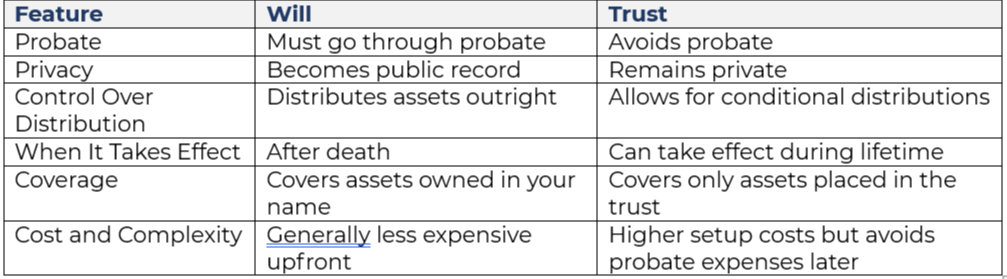
While both wills and trusts are used to distribute assets, there are key differences that set them apart:
Probate: A Major Distinguishing Factor
One of the most significant differences between a will and a trust is the probate process. Probate can be lengthy, often taking several months to over a year, and can be expensive due to court fees, legal fees, and executor fees. Moreover, because probate is a public process, the details of your will, including the assets you owned and the beneficiaries, become public record. Trusts, on the other hand, allow your estate to bypass probate entirely. This not only speeds up the distribution of assets but also keeps your affairs private. This aspect alone can make trusts particularly appealing for those who value privacy or want to minimize delays and costs for their beneficiaries.
Control and Flexibility Over Asset Distribution
Wills distribute assets outright to beneficiaries once the probate process is complete, which means beneficiaries receive their inheritance in full. Trusts, however, offer much more flexibility and control over how assets are distributed. You can set specific conditions, such as distributing funds at certain ages or only for specific purposes (e.g., education or healthcare). This level of control can be especially beneficial for parents who want to ensure that minor children or financially inexperienced beneficiaries receive their inheritance responsibly.
When Each Takes Effect
A will only takes effect after your death, outlining your wishes for asset distribution, guardianship, and other matters. A trust, especially a living trust, can be set up and managed during your lifetime, allowing you to see how it functions and make adjustments as needed. This can provide peace of mind and a smoother transition of management if you become incapacitated or pass away.
Cost Considerations
Wills are generally less expensive and easier to create upfront, making them accessible for many individuals. However, the cost of probate can add up, potentially outweighing the initial savings of drafting a will. Trusts, particularly living trusts, can have higher upfront costs due to the legal work involved in setting them up, but they can save time and money in the long run by avoiding probate and its associated fees.
Which Option Is Right for You?
Choosing between a will and a trust—or using a combination of both—depends on your specific circumstances, goals, and needs. If privacy, avoiding probate, and maintaining control over asset distribution are high priorities, a trust might be the better choice. However, if your estate is relatively straightforward and you’re looking for a simpler, more cost-effective solution, a will might suffice. It’s often beneficial to consult with an estate planning attorney who can guide you through the pros and cons of each option, help you understand the implications for your unique situation, and assist in drafting the documents that best protect your wishes and your loved ones.
Takeaway
Both wills and trusts play essential roles in estate planning, and understanding their differences is key to making the best choice for your needs. While a will provides a basic plan for distributing your assets, a trust offers additional layers of control, privacy, and protection. By carefully considering your goals and consulting with professionals, you can create an estate plan that provides peace of mind and security for your family’s future. If you would like to continue the conversation, contact us and schedule an appointment.